Sunday, 27 August 2023
Slow Travellers - Day in Amsterdam and Journey to Berlin
Thursday, 24 August 2023
Slow Travellers - Edinburgh to Newcastle
Saturday, 19 August 2023
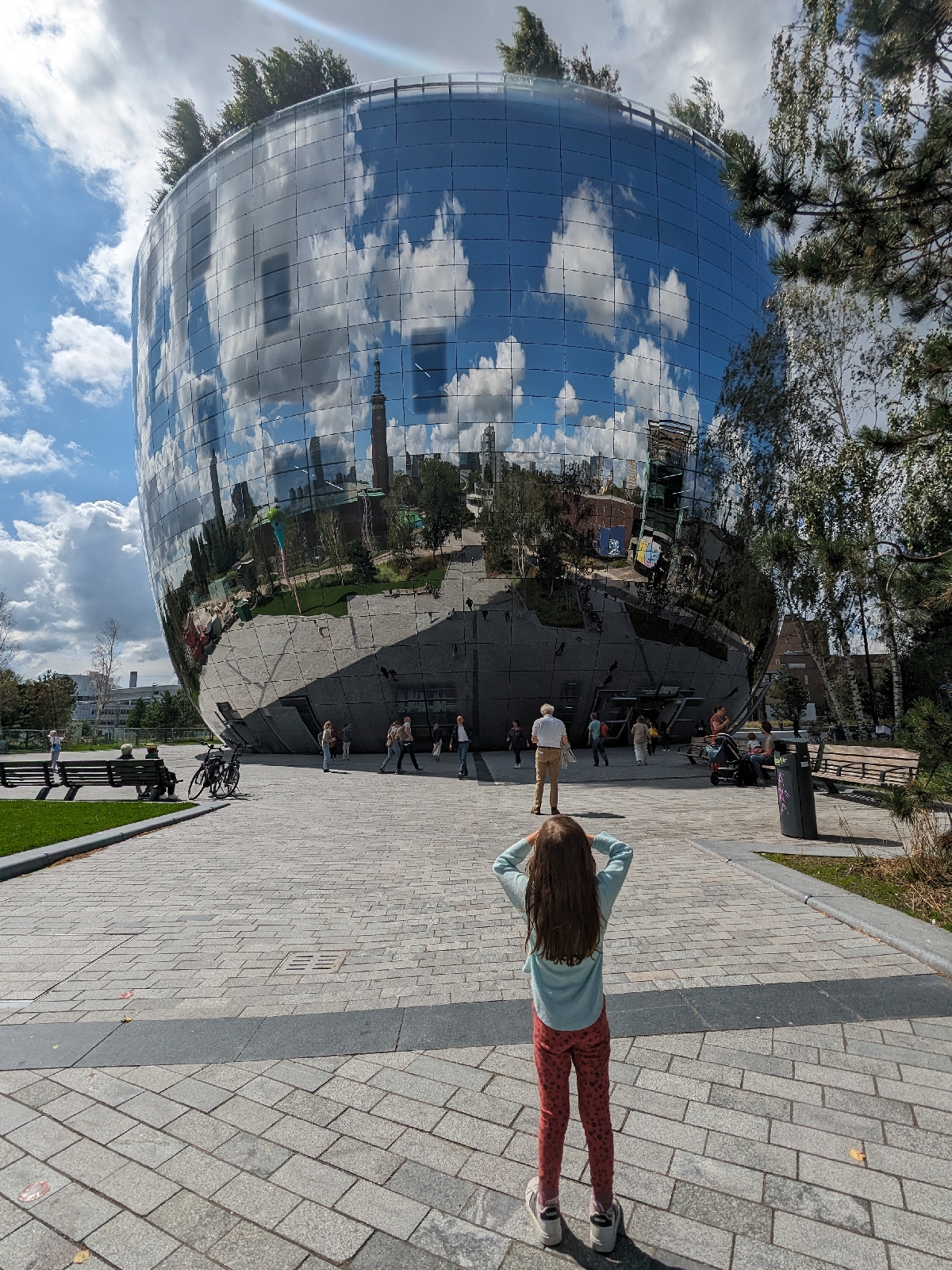
Slow Travellers - Berlin to Rotterdam
Thursday, 17 August 2023
Slow Travellers - Hull to Edinburgh
Thursday, 10 August 2023
Slow Travellers - Day in Rotterdam + Ferry to Hull
Monday, 7 August 2023
Slow Travellers - A Journey from Berlin to Edinburgh
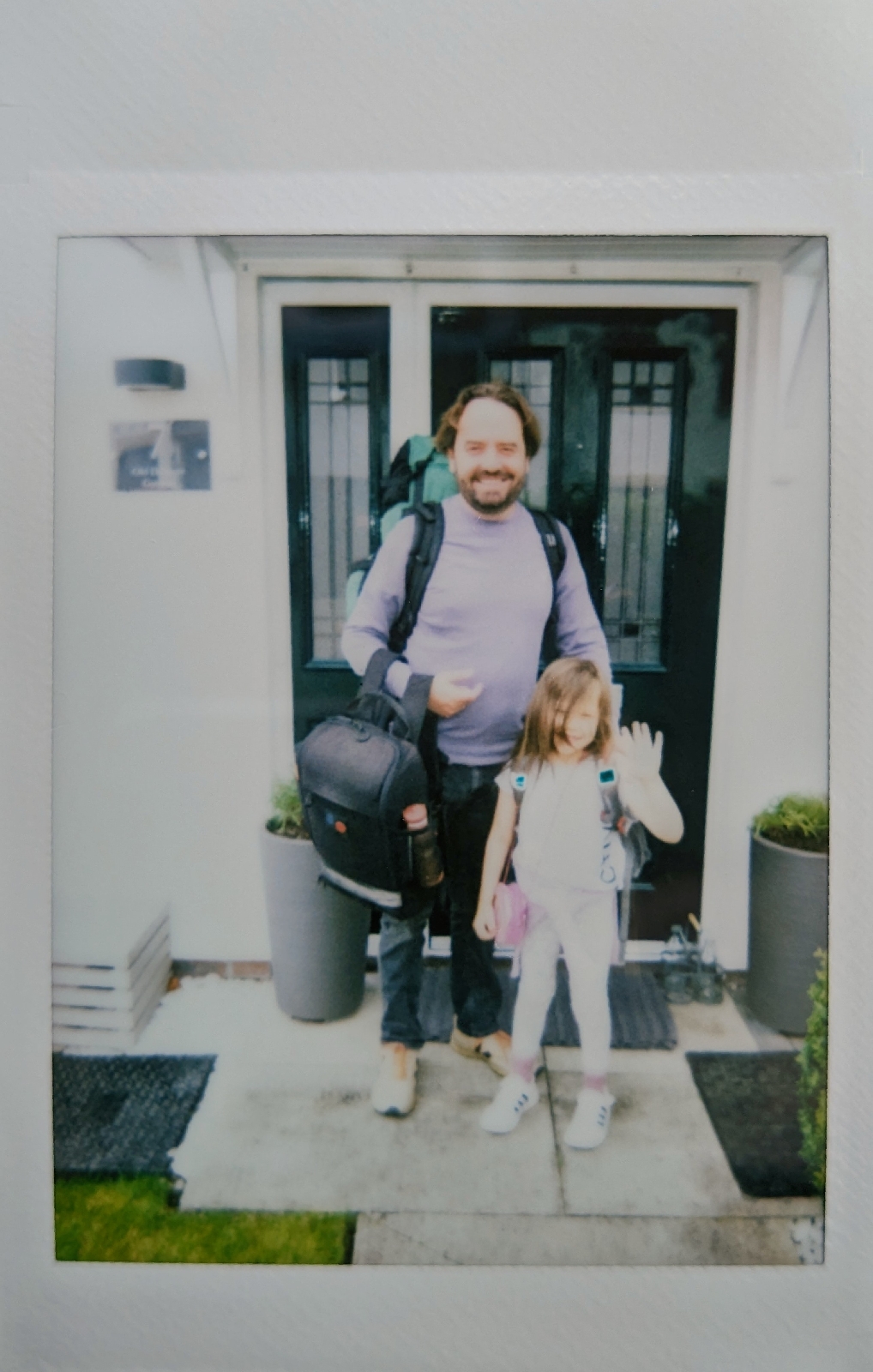
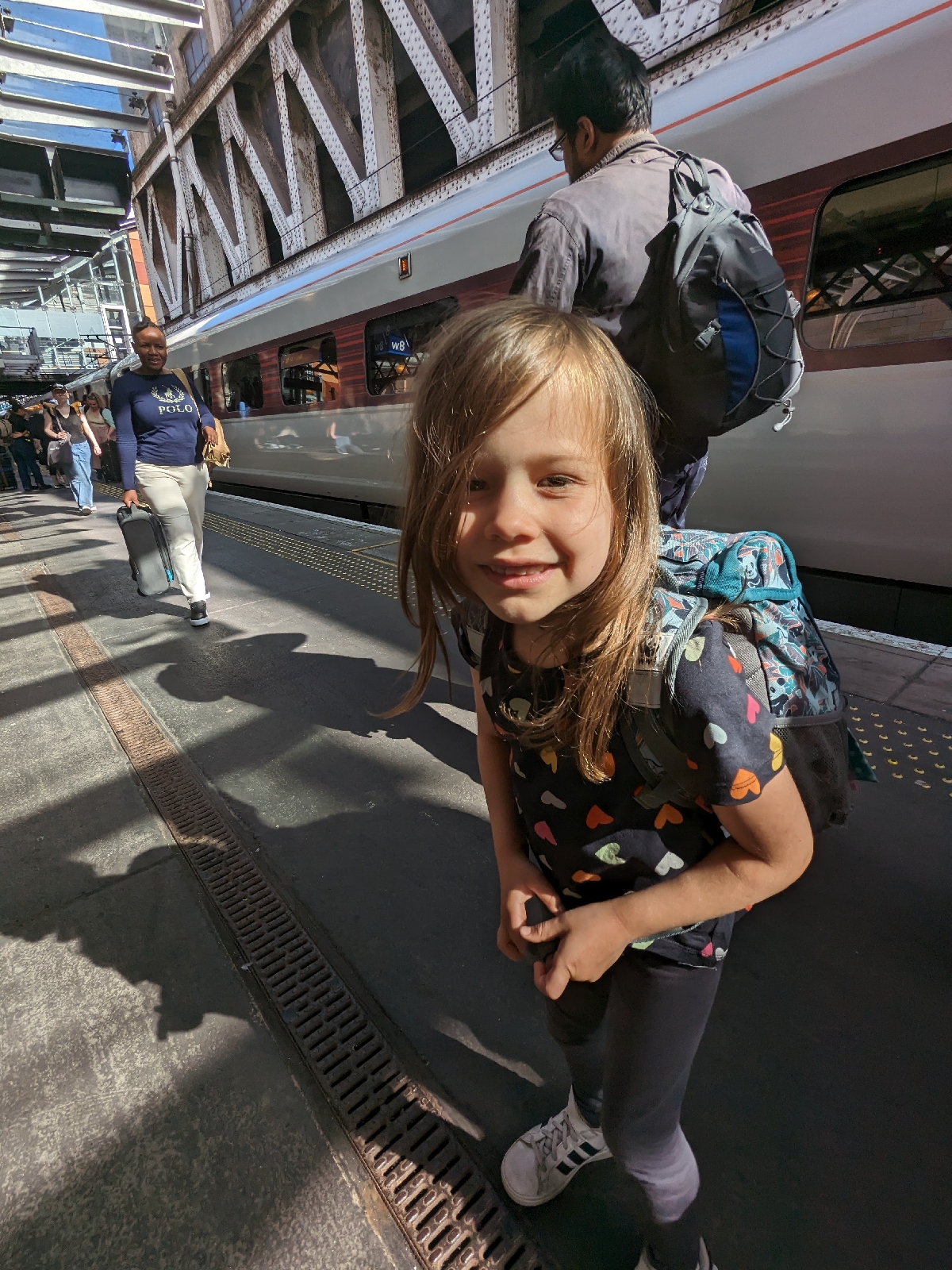
Since moving to Berlin over 10 years ago, we have made numerous trips home to visit friends and family in Scotland. Until now the most convenient (and previously most affordable) way to travel was via budget airlines from Berlin directly to Edinburgh. However since our daughter Marla started school last year we are now restricted to travelling in the school holidays, impacting in the choice and price of flights. The environmental impact of flying is well reported and we have long considered alternative means of transport with a lower carbon footprint. With the prolonged summer school break, my daughter and I decided to take the long way home and document our experience for potentially sharing with her classmates in the next school year. Marla attends Berlin Bilingual School, which is home to a vibrant international community (many of whom fly regularly to visit family) and I volunteer support to our schools Climate Action group - so this seemed like an ideal opportunity to share the benefits and (hopefully minimal!) drawbacks to slow travel,
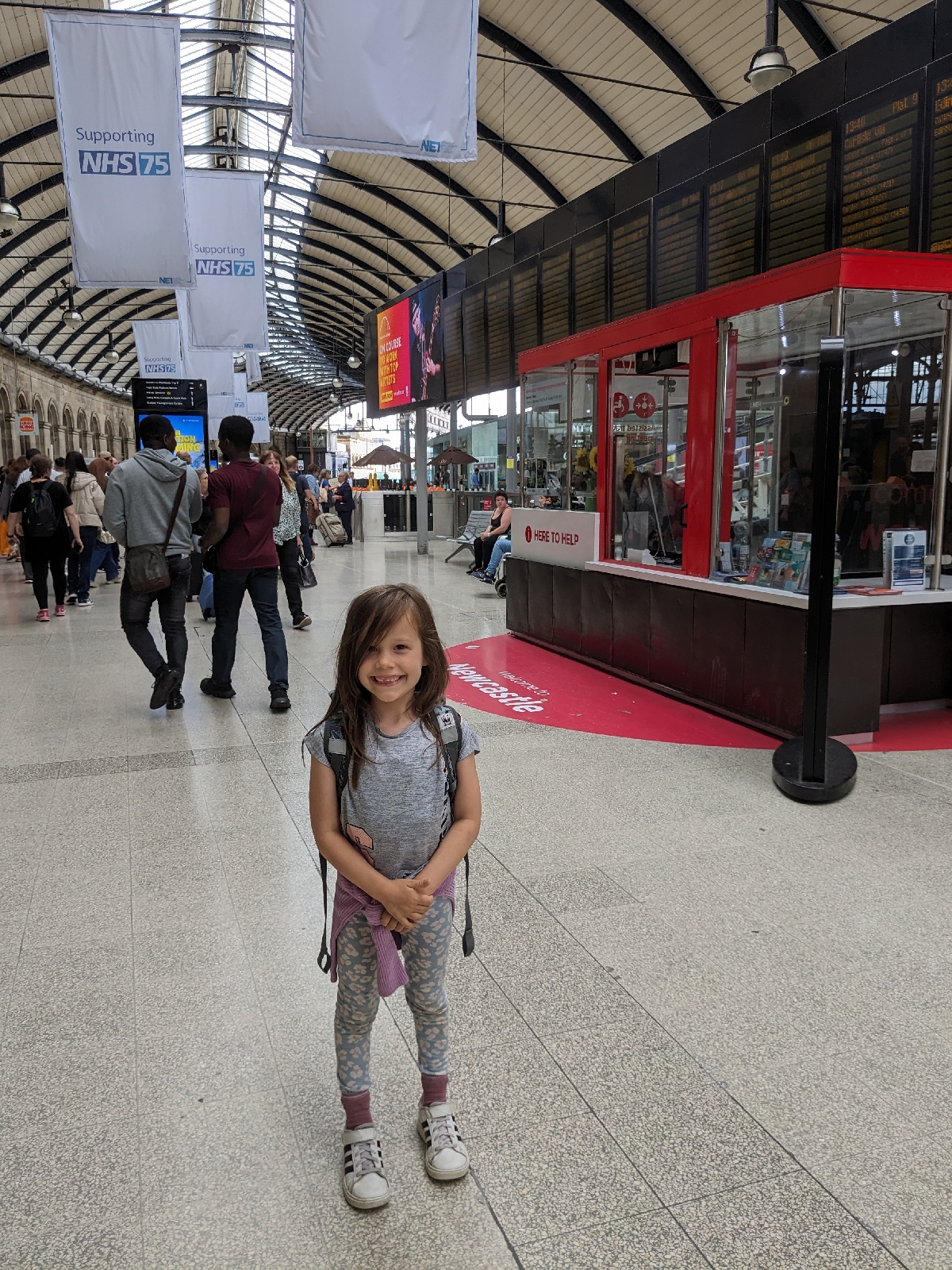
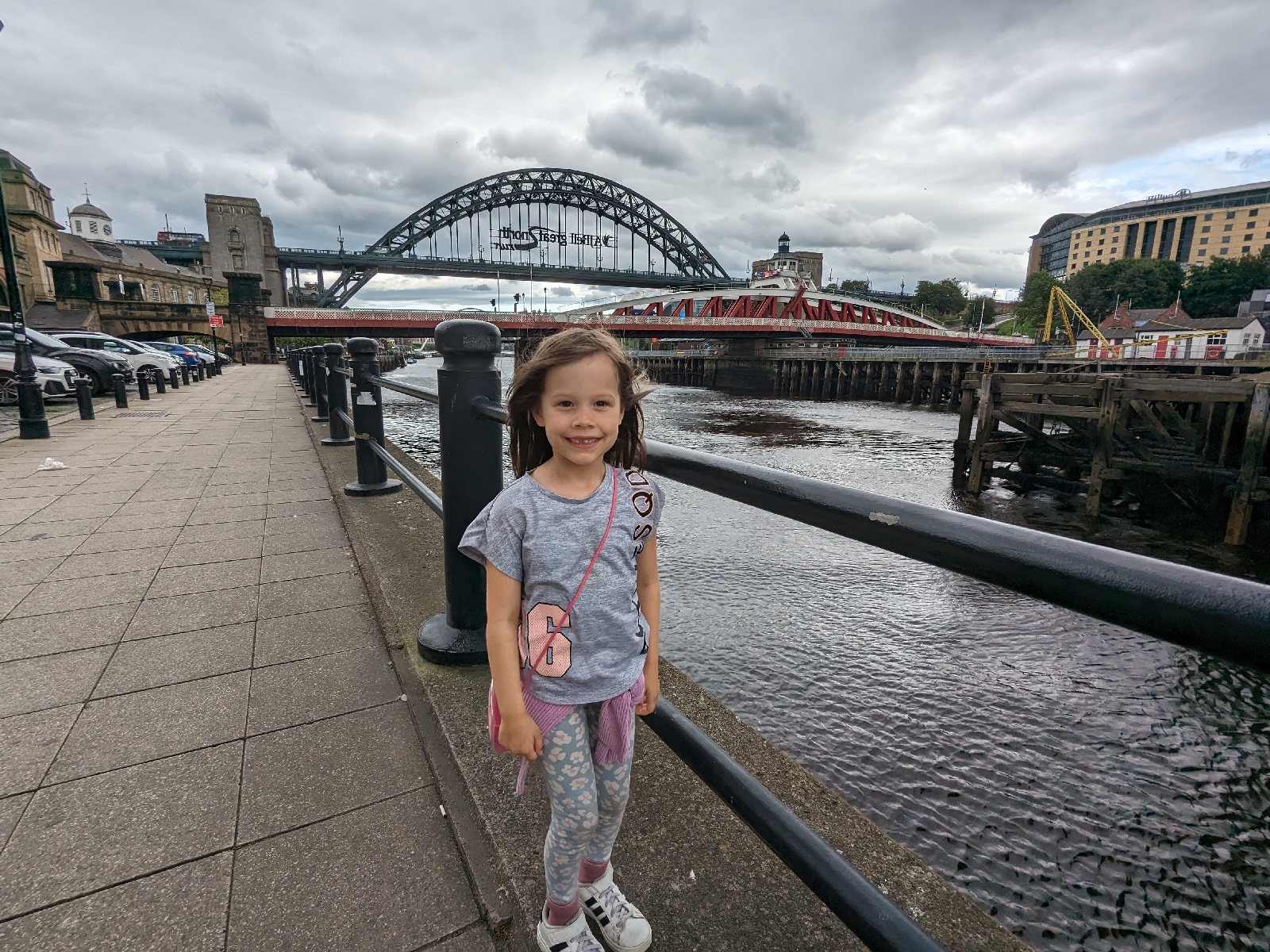
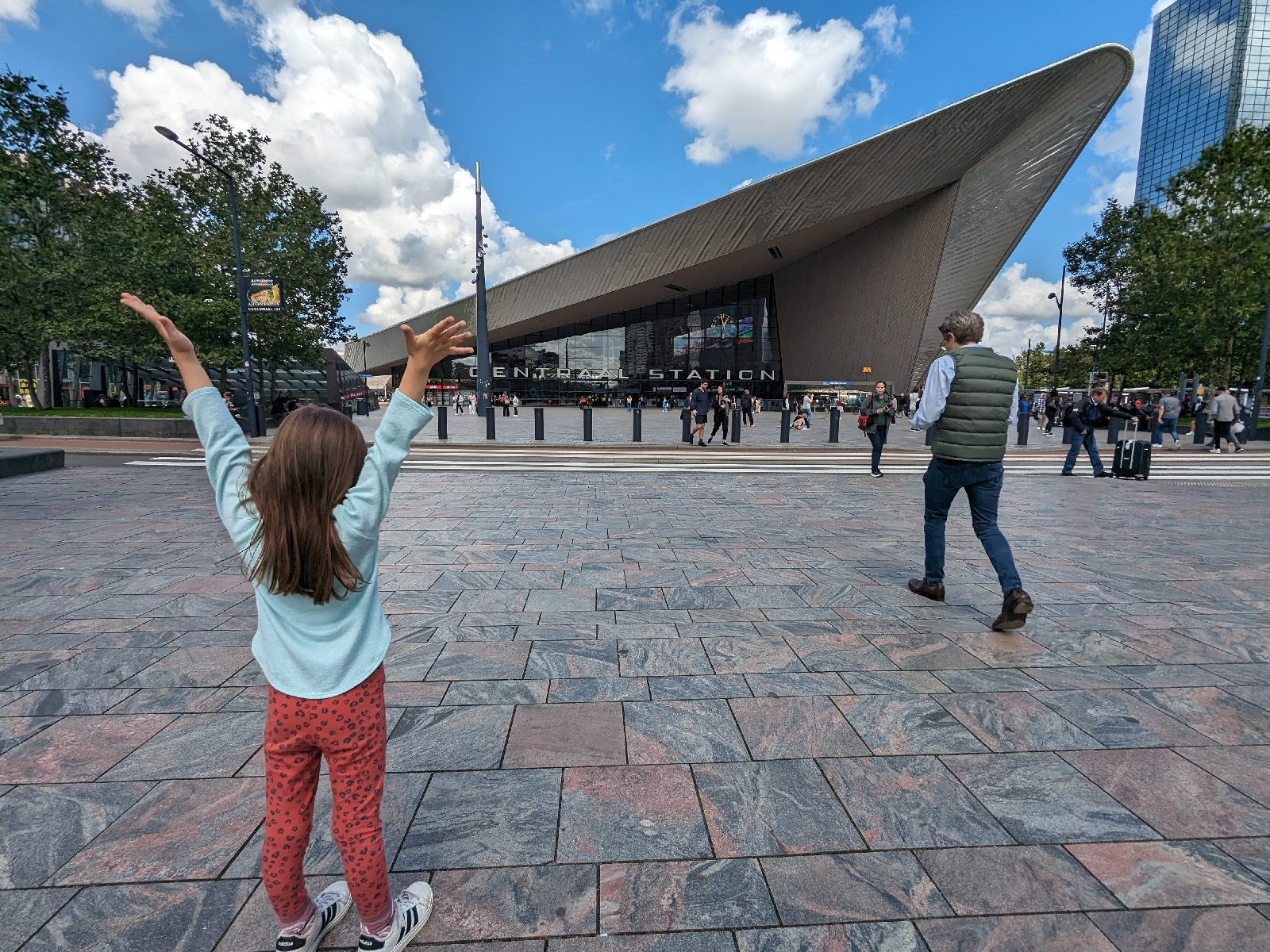
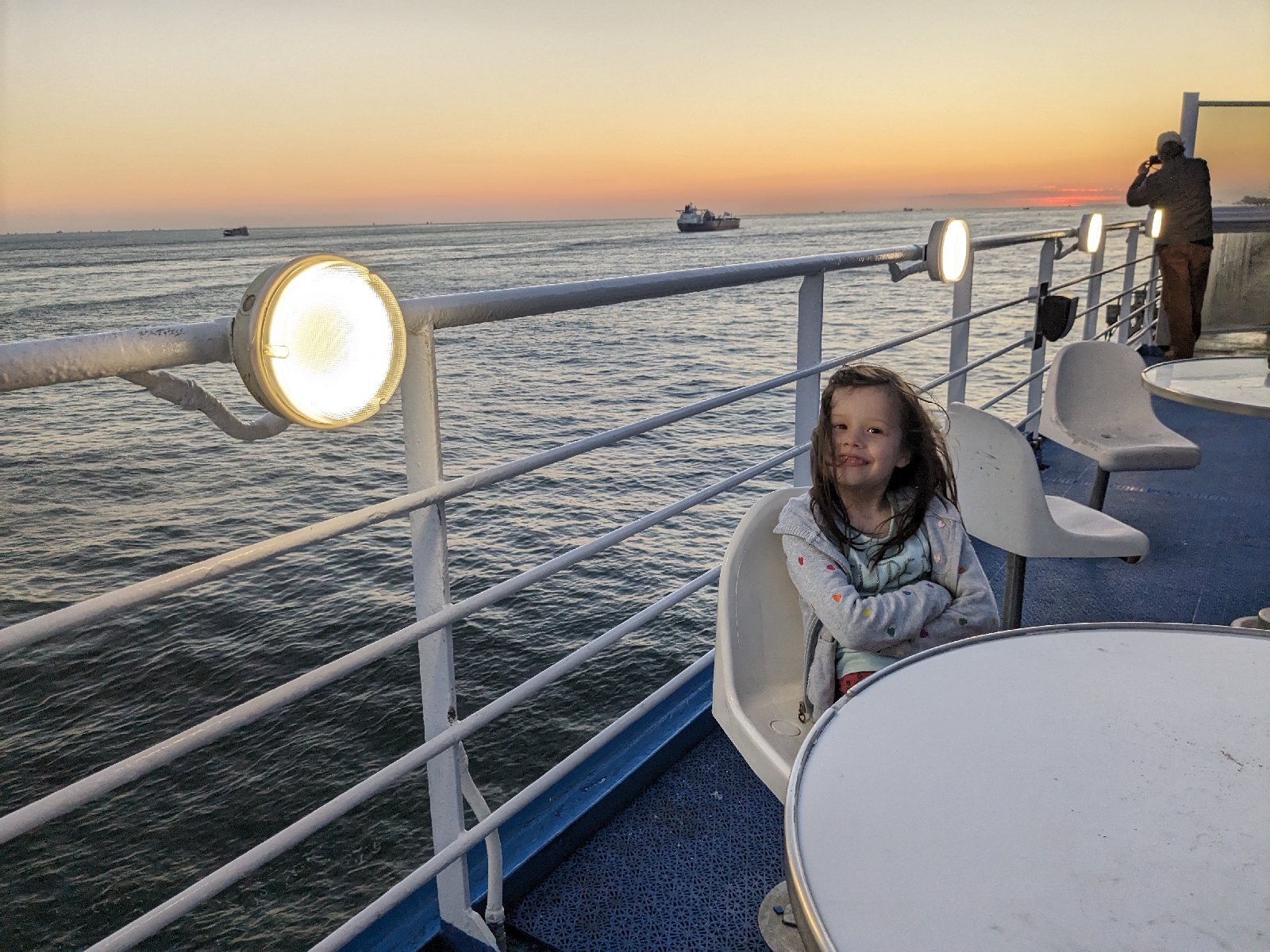
Together with Marla we sketch our planned route as shown below - we first travel to Rotterdam with train, before taking a ferry across to Hull overnight and then taking a train up to Edinburgh. For our return trip we will take a train to Newcastle Upon Tyne in the north of England, before ferrying to Amsterdam overnight and taking a train back to Berlin. As this is a ‘slow travel’ journey we will also make a number of overnight stops to visit some placets along the way and to cátch up with friends and family in the journey.
I also wanted to document the difference in carbon emissions (as well as cost, distance and time taken) that our journey takes in comparison to our well trodden flight route. There were of course other options (such as taking the train via the eurotunnel and via London) but the route we chose was the most economical financially and also allowed us to stop off at new places and visit some friends/family. There are a number of websites which can help you calculate your carbon emissions for each journey (and many try to sell you carbon offsetting!) but i found the most useful to be https://www.goclimate.com/travel-calculator. The figures it produces match those from a number of other websites but i like how they compare each journey via the mode of transport. Below you can see an overview of our predicted CO2 emissions. For duration for flying i have allowed for an hour journey at either end plus 2 hours for checking in.
Tuesday, 3 April 2012
Elgin Ecohome


Using this we created the following graphs for today and for 2050 assuming a 3 degree temperature rise due to climate change. We also combined this with the monthly solar irradiation levels to give an indication of when passive heating or cooling is required.


Thursday, 15 December 2011
Eco-services Come to Town
Green Roof TourThe day began with a tour of some ‘living roofs’ on a couple of multi-storey office blocks in the Broadgate area of London. I use the term ‘living roofs’ rather than ‘green roofs’ as these were not your typical turf laid to provide high-flying occupants with a piece of grass for rooftop schmoozing or lunchtime sunbathing. As our host Dusty Gedge, the president of the Federation European of Green Roofs Association (slight contradiction in terms there), described, these were real approach to adapting for climate change whilst providing a habitat for birds and with a sub-structure deep and varied enough to provide support to various invertebrates whilst retaining storm water and rainwater run-off. The roofs looked more fragile and natural than their green counterparts, as visitors weight were deflected by spongy moss cultures, reed beds and shrubs. The wildlife present was not placed there to provide a typically aesthetically pleasing landscape (although I think it actually did this as well) but to provide support and encouragement for local ecosystems and biodiversity.
Next we headed to the heart of the city of London and to Evergreens offices where they have extended this concept further to include a rooftop vegetable plot with beekeeping facilities. Their living roof used a thinner layering of substructure, showing that additional structural support is not always necessary to provide a flourishing biodiversity rich rooftop. This was particularly reassuring for me to see considering such a rooftop garden was a key element of my Shrubhill Design. Conversely, the building across from Evergreens was fitted with a minimal green roof (i.e. lawn) as part of their BREEAM certification, showing that sometimes such endorsements do not reflect the true intent behind the project. We then headed to the Museum of London, where an ambitious project of ‘living roof’ retrofitting is underway. The even intend on converting areas of pooling on their flat roofs into rooftop ponds providing a larger variety of biodiversity.Eco-services Conference
The organisers provided a wide variety of speakers with a balanced and perhaps sometimes too pragmatic approach to greening the built environment. Inspirational speeches were provided by Gary Grant (independent ecologist and IHDC judge) and Dr Bob Bloomfield (Head of Special Projects at the National History Museum) who talked about the ways in which biodiversity was already creeping into the built environment and its importance in relation to the United Nations Decade of Biodiversity. For me, the most interesting speech of the day came from an accountancy firm! PWC (PriceWaterhouseCoopers) have been compiling a report into how they can put a financial value on ecosystems and biodiversity as a tool for encouraging their clients to consider their companies actions on the environment. Whilst I don’t fully agree that everything should have a monetary value – I’m acutely aware that this is a viewpoint that is not shared by many decision makers and any tools to highlight the destruction carried out by certain activities has got to be a good thing. I was less impressed by talks given by representatives of Land Securities and Greater London authorities, whose entire focus seemed to be on how many trees they can plant in an area, regardless of their species, necessity or if their surroundings are capable of supporting rainwater run-off. Land Securities showed images of heavily hard-landscaped shopping centres with a scattering of trees which provide their inhabitants with pleasant surroundings in which to eat their lunch. Thankfully this was picked up by some conference goers in the following Q&A session.
I was really impressed by the work carried out by the other finalist, in particular the Hafod Copperworks scheme in Swansea. It was a very ambitious project, tackling the impact of area starved of long-term investment which many communities today are suffering from. I felt their submission really combined social-economic and environmental issues in a realistic and effective way. I was (along with my parents) spared a last minute announcement and given a heads-up by the organisers about my success in the afternoon. I hadn’t prepared a speech as I didn’t want to jinx my chances; however I had thought enough about winning the previous weeks to be able to conjure something up on the spot. I was a bit disappointed not to receive a comedy-sized cheque, but that perhaps is being a little too trivial. The follow-up so far has been encouraging, with my work being displaced in Architects Journal and Sustain Magazine as well as the through Heriot Watt and local newspapers. I also gave a presentation of my work to SEDA Show & Tell at the Glasgow School of Art. The local council and architects have also been in touch about the possibility of my giving a presentation in the New Year in the hope of persuading the client of the possibilities of integrating biodiversity within the site.